
Wholesale Electricity Prices Down as Weather Warms
Wholesale electricity prices have dropped considerably in New York after a particularly frigid winter which resulted in soaring demand and operational challenges resulting in the need for emergency procedures to operate the grid reliably.
In early April, NYISO’s wholesale energy markets saw real-time electricity prices average around $30-40 per megawatt hour – down from an average of $141 in January and $114 in February.
Early April is typically one of the lowest‑price periods of the year for New York’s wholesale markets. Winter heating demand has faded, cooling demand hasn’t ramped up yet and the mild weather means both sun and wind are providing the grid with an abundance of clean, low-cost energy.
NYISO markets are designed to select the lowest-priced resources necessary to meet consumer demand for electricity at any given time.
A variety of market factors contribute to the cost of electricity at any given time. In this case, a combination of low consumer demand, relaxed natural gas prices, production from renewable resources, and minimal transmission congestion are driving down energy prices across the state.
Demand dips
NYISO load forecasts and real time data for early April show well below average statewide demand, especially overnight and during hours when prices are set.
Lower demand means lower‑cost generators are setting the price. Last week, load dropped to 12,234 megawatts (MW) on April 9 and peaked at 18,097 MW to on April 7.
Compare that to late January, during Winter Storm Fern and a prolonged deep freeze that followed, when demand peaked at over 24,000 MW on two days and well above 23,000 MW on most other days.
At the beginning of the month, mild weather contributed to lower demand for grid-supplied electricity, while behind-the-meter solar generation reduced demand even further. At several points, real-time prices went negative, signaling excess supply. These prices are typically short-lived as the NYISO-administered markets respond to those signals.
Real-time prices reflect just a small portion, roughly five percent, of daily electricity transactions. Most electricity sold through the wholesale markets is purchased a day in advance of when it’s needed, through a competitive bidding process in the “day-ahead market.”
The natural gas factor
Because natural gas sets the marginal electricity price in New York much of the time, gas market conditions are an important factor.
Ample gas supply, combined with easing demand due to warming weather, is keeping fuel costs low for generators in April. Henry Hub gas prices are near or slightly below $3/MMBtu so far, down from around $300/MMBtu in late January.
Renewable output
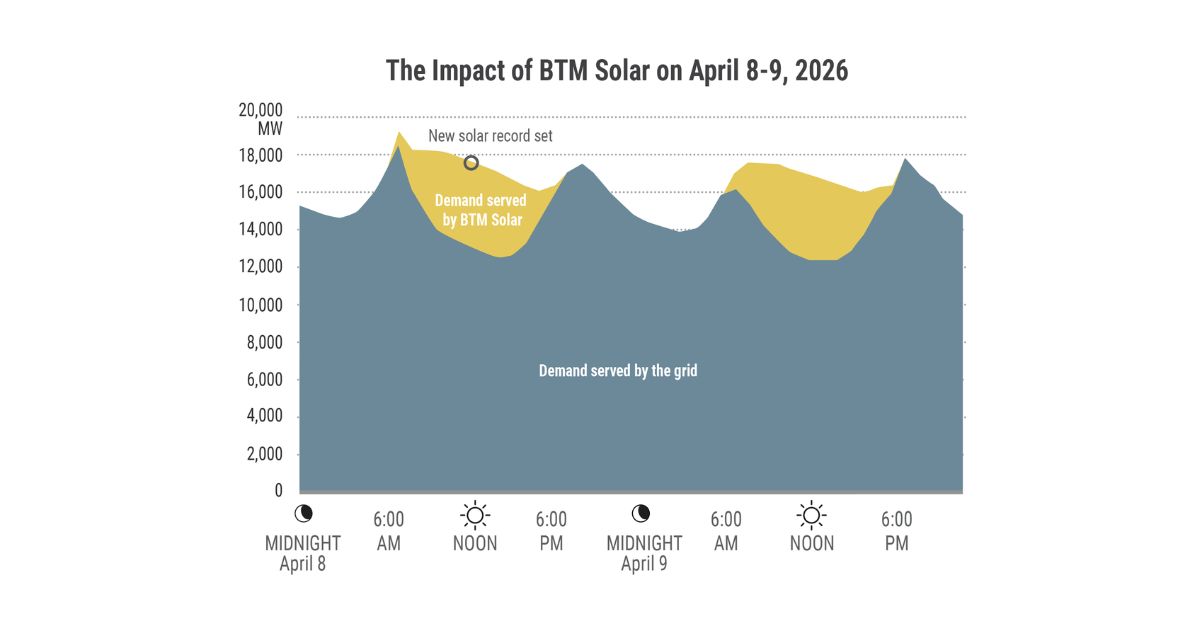
Last week, the grid saw higher than average solar and wind generation, particularly overnight and during midday hours. In fact, a new solar generation record was set on April 8 during the noon hour. At that time, behind-the-meter solar resources reduced demand on the grid by 4,687 MW while front-of-the-meter solar resources directly supplied the grid with 553 MW. The substantial BTM solar production helped to reduce demand on the grid to less than 13,000 MW, which was lower than overnight demand.
Because renewables have zero fuel cost and reduce the need to dispatch higher‑priced fossil units, they help reduce the price of electricity in most parts of the state.
The snapshot below shows how behind-the-meter solar output shaved demand on the grid for several hours a day.

Learn more
Please visit our electricity pricing resource page to explain what's behind costs