
CRP: Expanded Planning Framework Needed to Capture Emerging Risks
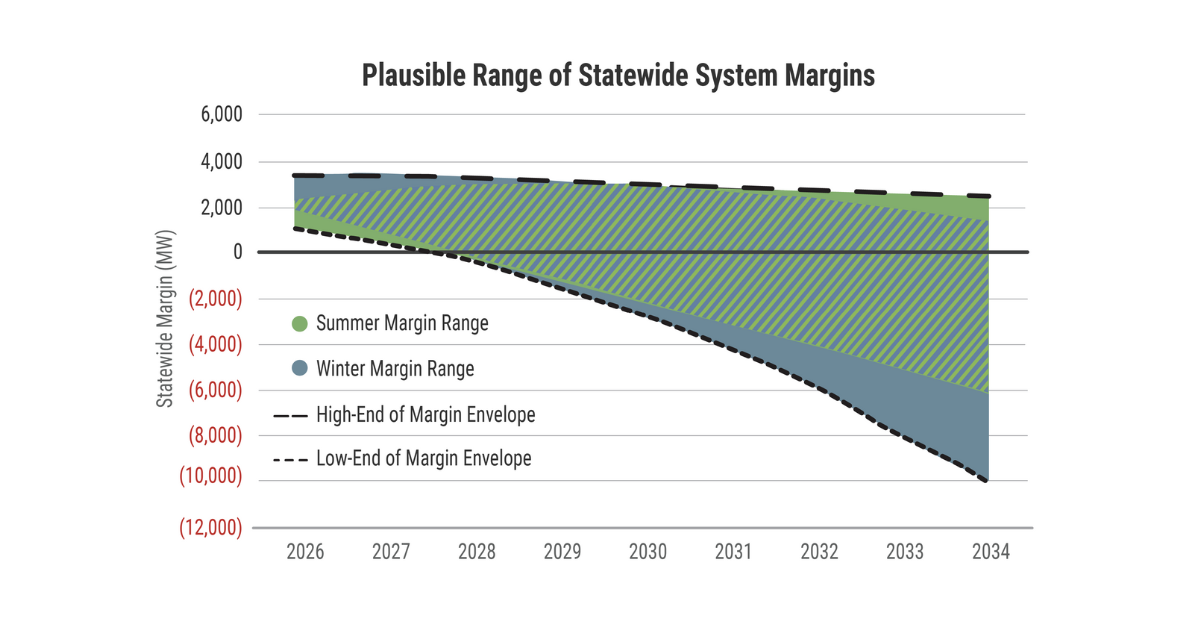
The electric grid is undergoing a transformation unlike anything seen in its history. New York’s ambitious climate goals, rapid electrification, new renewables, and the rise of large-scale energy users are reshaping demand patterns and resource availability.
In its 2025-2034 Comprehensive Reliability Plan (CRP), the NYISO highlights how the current reliability planning methods can be enhanced to capture a range of emerging risk factors across generation, demand, and transmission that could affect system reliability over the next decade.
While past reliability reports have identified similar vulnerabilities and risks, our latest CRP shows how reforms to the planning process can provide greater insight into emerging trends to ensure reliability in the future.
“The next Reliability Planning Process cycle must implement a more proactive and expanded framework—one that better integrates a range of demand profiles, operational realities, and the accelerating pace of change in the resource mix,” NYISO Senior Vice President of System and Resource Planning Zach Smith said.
The primary risks identified in the report include aging power plants, shifting demand forecasts (influenced by electrification and large industrial loads), the potential for delays in major renewable and transmission projects, and increasing instances of extreme weather that create concerning spikes in demand.
Each of these risks injects some amount of uncertainty into how reliable the grid will be in the future. When combined, they create an increasingly complex and unpredictable operating environment for NYISO’s operators responsible for balancing load with demand in real time every minute of every day.
Due to the growing number of plausible outcomes within the next ten years, the CRP concludes that solely relying on a single baseline forecast to identify actionable needs is no longer sufficient.
To address this, the NYISO is working with stakeholders to evolve its planning methodology so that reliability needs can be identified earlier and more accurately under a broader range of plausible conditions. This would enable timely solutions and investments needed to sustain reliable grid operations.
Today’s approach to reliability planning assumes a single expected future as a baseline, which is used to identify actionable reliability needs. When a reliability need is identified, it triggers a solicitation process for investments to keep the system running soundly. When no need is declared, no action is taken. If the models show the system will be reliable in this baseline condition, then grid planners must conclude that no reliability needs exist.
Moving forward, NYISO seeks to use scenario planning concepts to stress-test the grid under multiple plausible future outcomes with the intent of identifying reliability needs to keep the system safe. Each combination of system conditions will vary assumptions about demand growth, resource mix, transmission development, and project timelines.
By exploring these futures, NYISO can provide stakeholders with insights to navigate uncertainty and ensure reliability throughout the clean energy transition.
Emerging Risks that Threaten Grid Reliability
- Reliance on Aging Generation
- New York’s generation fleet is among the oldest in the country. Many fossil-fuel units that provide essential reliability services are nearing retirement. If these retirements outpace the addition of new resources, reliability margins could shrink.
- Large Loads and Future Demand
- Electrification of heating and transportation, combined with new industrial projects such as data centers and hydrogen production, will drive demand up significantly. The system will also shift from summer-peaking to winter-peaking, adding complexity to planning and operations.
- Reliance on Imports
- New York has historically depended on imports from neighboring regions. As those systems also face significant changes, surplus energy for export will decline, increasing the need for in-state resources.
- Extreme Weather and Seasonal Peaks
- Weather-driven demand spikes and renewable variability will challenge system operations. The transition to a winter-peaking system adds new reliability risks during cold-weather extremes.
- Delays in Planned Projects
- Transmission and generation projects are essential to meeting policy goals. Delays in permitting or construction could create congestion and reliability shortfalls.