
Podcast Ep. 43: U.S. EIA Analysts on Short-Term Energy Outlook (STEO) and Rising Electricity Prices
A surge in natural gas prices this winter was a reminder of the relationship between fuel markets and wholesale electricity prices.
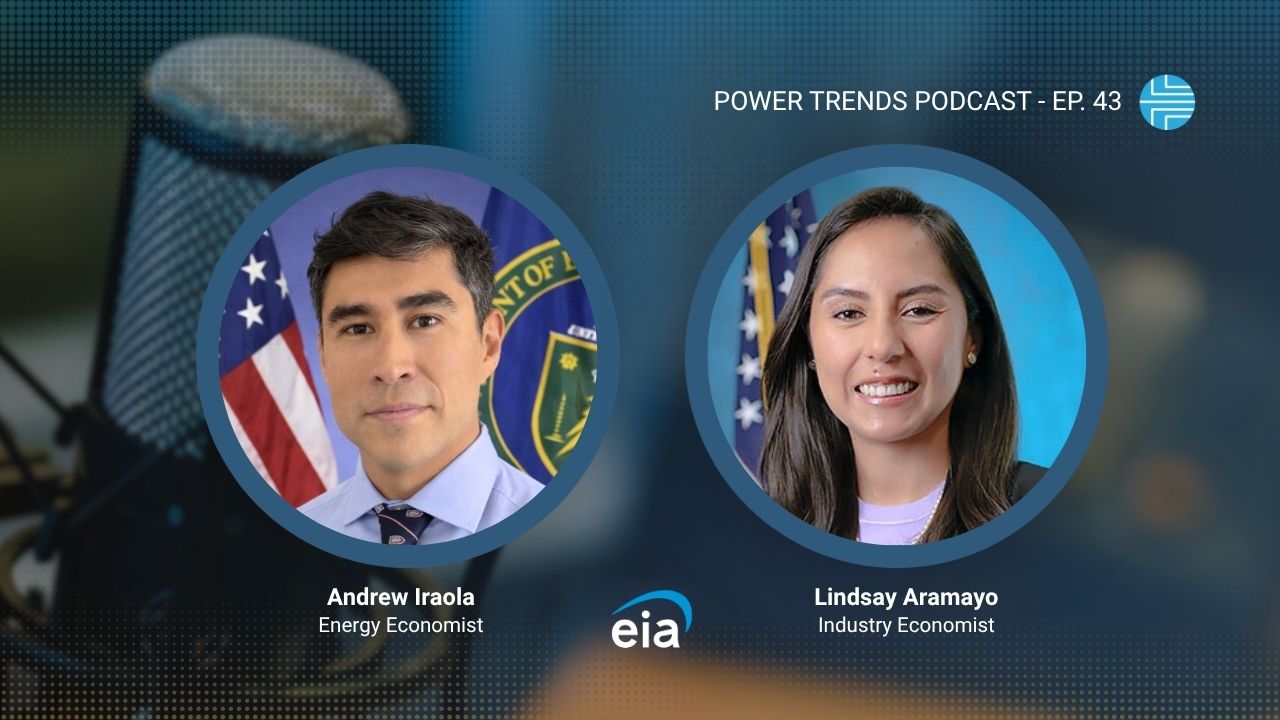
In the latest episode of our Power Trends podcast, U.S. Energy Information Administration’s (EIA) Energy Economist Andrew Iraola and Industry Economist Lindsay Aramayo unpack what drove the recent electricity price spikes, natural gas constraints, and what we can expect in the months ahead.
Aramayo discussed recent price volatility, noting that wholesale electricity prices averaged about $70 per megawatt-hour (MWh) in New York prior to Winter Storm Fern.
“By the time we released our February Short-Term Energy Outlook (STEO), those prices had increased to $220 per MWh,” she said. “That helps you see how volatile wholesale prices can be, and how dependent they are on natural gas prices.”
New York relies on natural gas for residential heating and electricity production. Winter Storm Fern sharply increased heating demand while temporarily reducing natural gas availability. The disruptions to natural gas supply were caused in part by “freeze offs,” which occur during extreme cold when water and other liquids freeze and block the flow of natural gas.
The reduction in fuel availability contributed to record natural gas withdrawals and a jump in gas prices.
Iraola noted the behavior of the system in January and February often helps guide the rest of the year. If there is a large storage withdrawal, that can keep inventories below the five-year average, which puts upward pressure on prices. It also makes it more difficult to rebuild inventories during injection season, which runs from March through October.
The discussion underscored why natural gas remains a key driver of electricity costs, particularly in regions like New York that sit at the end of the natural gas pipeline system. This can create tighter constraints during peak demand.
According to Aramayo, data center buildout is a driver of electricity demand in other regions including the Mid-Atlantic and South. In New York, it’s electrification of the transportation and building sectors that’s driving demand. EIA’s reports note that natural gas will remain the dominant fuel for power generation and predict natural gas price increases, driven by stronger demand, will continue to place upward pressure on wholesale electricity prices in the coming years.
The STEO reflects an increasingly complex and uncertain energy environment, the economists said. When evaluating natural gas markets, analysts consider volatility shaped by weather, infrastructure constraints, and fluctuating demand.
Understanding these dynamics is essential for making sense of wholesale electricity prices and for planning a reliable, affordable grid.
Additional Resources
- U.S. Energy Information Administration Short-Term Energy Outlook (STEO)
- NYISO Winter Electricity Pricing Resource Page