
About Wholesale Electricity Markets
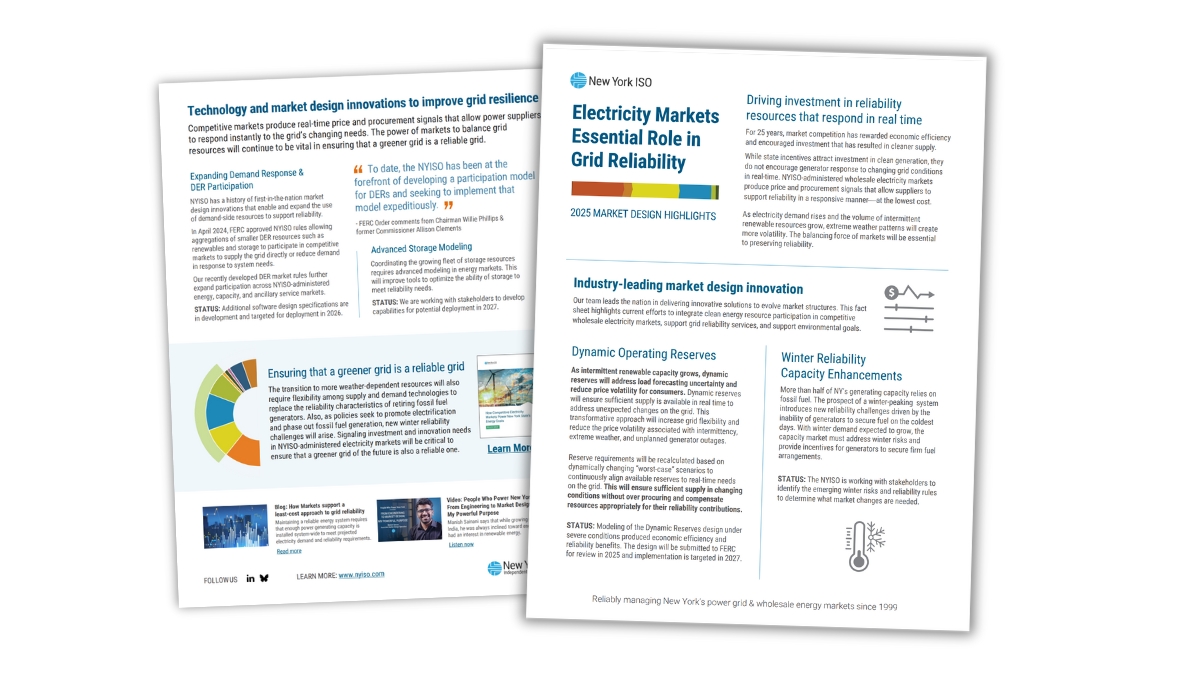
Read, watch, and listen: our latest info on electricity markets


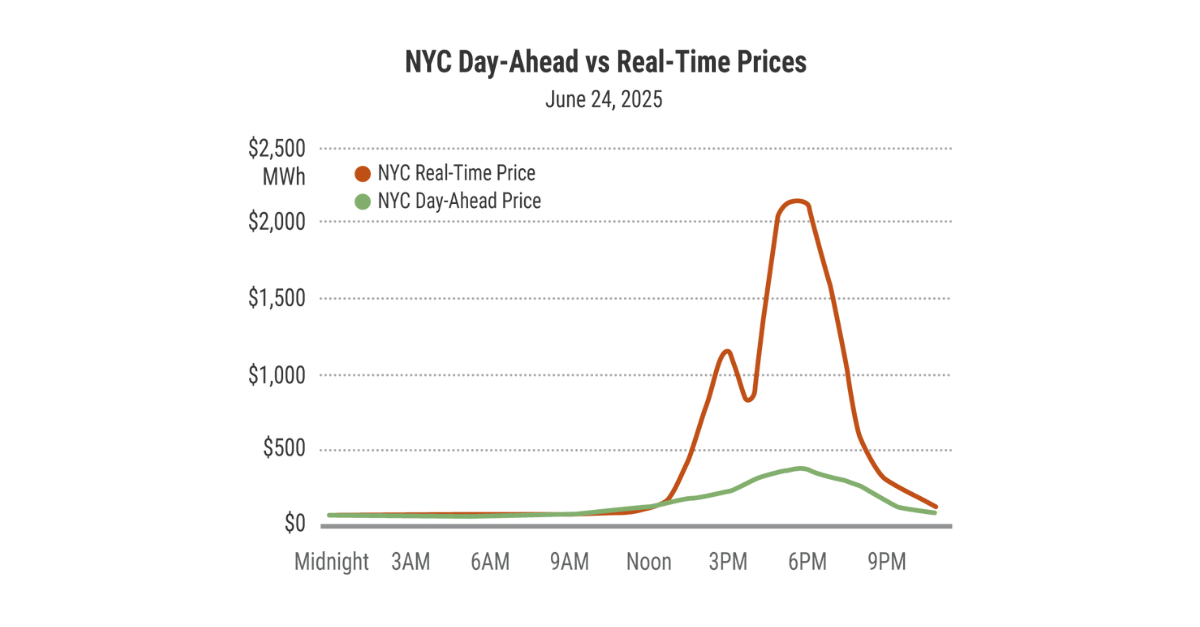

The NYISO calculates the price of electricity by determining the expected demand and evaluating numerous supply offers to meet that demand. These offers are ranked by cost from lowest to highest, with the NYISO’s market software selecting the least costly resources first, and then continuing to select supply resources until the total demand is met. All selected suppliers receive the price set by the last supplier needed to meet demand ― this is known as the clearing price.
A key element of the market design is that it enables actual costs, including fuel costs, to be accounted for in the clearing price for electricity. As a result, while the competitive market works to minimize cost, electricity prices are significantly influenced by fuel costs and these costs are ultimately passed through to consumers in the electricity supply component of their bills.
Energy markets are like a commodities market, with one major exception: electrical energy can only be stored in very limited quantities. Other commodities such as oil, gas, or wheat, can be stored. Electricity is different. The amount of energy on the grid being consumed must, at all times, be equal to the amount of energy being generated. This is true 24 hours a day, 7 days a week. To run the energy grid, you need operators to balance the flow between generation and consumption. And you need energy markets that work both a day ahead and in real time to incentivize and pay the energy generators to be available to generate the power we need to meet demand.
To do that, we have three markets: the energy market, ancillary service market, and capacity market. These three markets work together. In simple terms:
- Energy markets secure resources to supply the demand on a minute-to-minute basis.
- Ancillary service markets procure a variety of additional services to protect the electric system and balance supply and demand to meet system needs instantaneously.
- Capacity markets provide incentives to generation resources to maintain additional energy reserves over a longer period. Through the capacity market, we determine how much capacity is needed to meet the expected peak demand for the year plus a margin of additional resources to call on, if necessary.
Working together, these markets keep the system reliable in real time and also drive system response so that if we have a sudden need, for example if the wind suddenly dies down, other resources can ramp up and fill that need. The purpose of the energy market and ancillary service market is to meet the reliability needs in real time, and the purpose of the capacity market is to make sure that we have sufficient resources in the longer time frame.
Wholesale Electricity Prices
Fossil fuel costs fluctuate due to economic factors such as global demand for fossil fuels, inflation, lagging supply, and global instability caused by war. While consumers might expect these conditions to impact the cost of gasoline, many have been surprised by the degree to which these fossil fuel prices find their way into electricity bills as well.
That’s because the power grid does not operate in isolation. The competitive wholesale electricity markets in New York are heavily influenced by national and global fossil fuel markets. The same economic and geopolitical factors that are causing volatility in oil and natural gas markets nationally and globally ultimately affect wholesale electricity markets as well. These conditions impact the costs to produce electricity, which ultimately are reflected in wholesale electricity prices and in supply charges seen in consumer bills.
Wholesale electricity markets in New York are designed to meet the electricity needs of consumers in the most cost-efficient and reliable manner possible, even when the factors that influence those costs, like fuel, materials, and labor, put upward pressure on prices.