Summer and Winter Extremes Present Unique Reliability Challenges
Summer and Winter Extremes Present Unique Reliability Challenges
August 10, 2026
Two recent weather events exemplify how shrinking supply margins, growing demand and increased seasonal volatility are already impacting New York’s electric grid.
Last month’s Independence Day heatwave sent demand soaring and coincided with several generator and transmission outages, while Winter Storm Fern in late-January brought sustained cold that elevated winter demand and constrained fuel supplies.
In both cases, NYISO grid operators had to manage narrow margins and navigate challenges affecting generator availability, transmission flows, and fuel supply logistics.
Electricity prices tend to follow a similar pattern across seasons, rising during periods of peak demand in both summer heat and winter cold as supply margins tighten.
While the grid has historically been a summer peaking system, Winter Storm Fern and similar prolonged cold-weather events underscore the need to bolster the grid against extreme winter conditions.
A growing reliance on emergency tools
The NYISO has warned of these scenarios in recent years, with reliability reports identifying near- and long-term potential shortfalls.
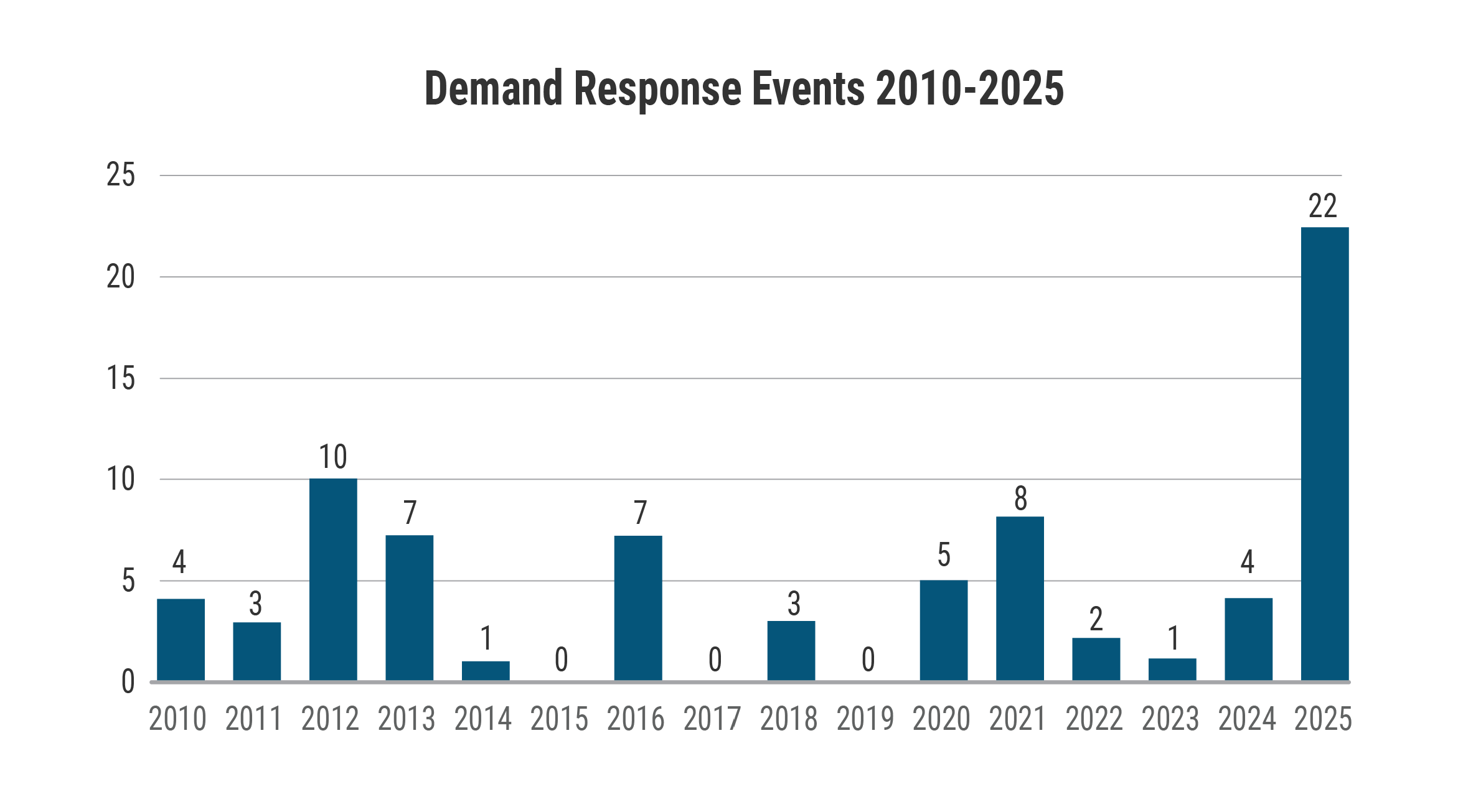
A growing reliance on emergency operating procedures, including demand response activations and emergency imports, has emerged during periods of extreme weather stress.
While these tools are essential for maintaining reliability in real time, their more routine use signals tightening operating margins and reduced system flexibility.
As documented in NYISO planning assessments, frequent activation of emergency measures limits the options available when conditions further deteriorate and highlights structural challenges associated with generation availability, fuel availability constraints, demand growth, and increasing weather volatility.
A side-by-side comparison
Seasonal extremes affect the grid in distinct but overlapping ways, requiring different operational responses to maintain reliability. While summer conditions have primarily tested the grid’s ability to meet peak load, winter conditions tend to expose fuel availability and transmission limitations.
During the Independence Day heatwave, one of the most challenging reliability tests New York has faced in years, several generators and the brand-new Champlain Hudson Power Express transmission project were unexpectedly out of service. This meant NYISO grid operators were forced to engage emergency procedures to keep the electricity flowing.
Winter Storm Fern drove a sustained increase in winter demand alongside fuel supply constraints, particularly for natural gas, and snow-covered solar panels hampered renewable output.
The storm further demonstrated how transmission constraints can compound supply challenges. During the prolonged cold weather event, available generating capacity on Long Island could not be fully delivered to downstate load centers due to transmission bottlenecks, forcing operators to rely on more costly resources despite adequate capacity being available within the region.
The NYISO has identified the future Propel NY Energy transmission project as a key solution to address limitations by expanding transfer capability by at least 3,000 MW between Long Island and the rest of the state.
By strengthening the transmission system, projects like Propel NY Energy can reduce reliance on emergency operations, improve access to available generation during extreme conditions, and support a more reliable and efficient grid across seasons.